Mapping Loads from Rooftop Solar Racks
Map rack reactions onto the existing roof framing. Use the example below to practice the review and record an output that another reviewer can reproduce.
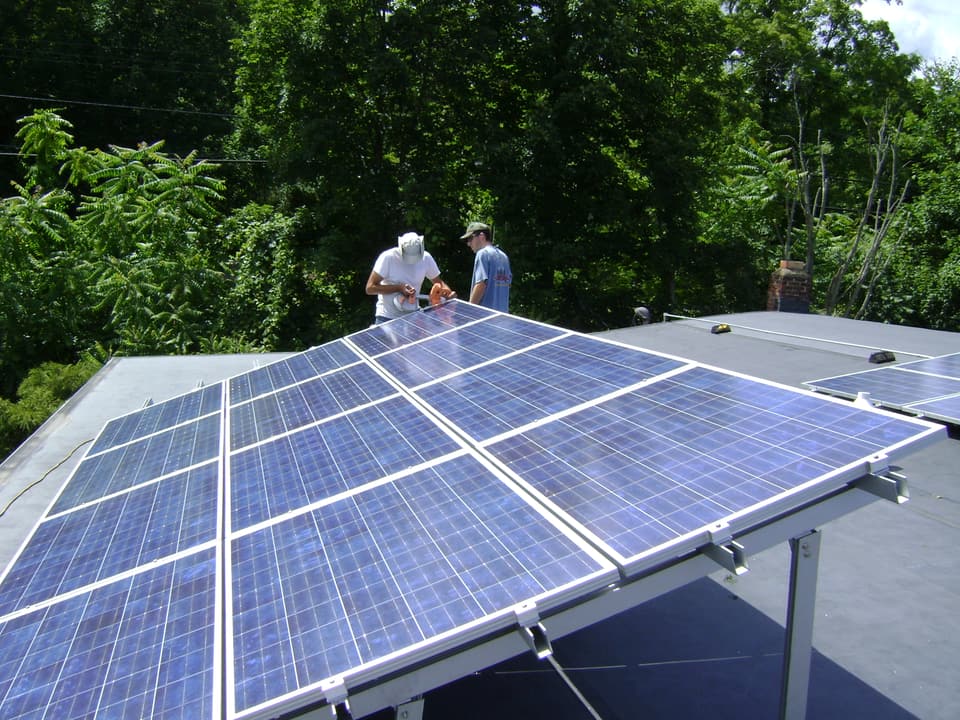
Inputs and Prerequisites
Roof plan, fixed ballast schedule and separate code-derived action cases.
Review Workflow
- Pad map
- Load cases
- Roof framing
- Reaction sum
- Map rack reactions onto the existing roof framing.
- Identify patch loads and retain their footprint.
- Track rain, snow and wind cases separately in the load register.
Worked Example
Four assumed 0.6 kN ballast reactions bear on two parallel beams. If each beam receives two pads, each receives 1.2 kN before adding panels or roof self-weight. Swapping one pad to the other beam changes the split to 0.6 and 1.8 kN.
Output Checks and Common Errors
Reconcile roof and rack reactions. Obtain project-specific snow drift, uplift and drainage criteria from the governing basis.
Official References
- ASCE 7 design loads
Locate the load and edition provisions applicable to the roof and rack.
Related Calculation Workbooks
- Roof Snow and Drift Worksheets
Compare the uniform, parapet and lower-roof snow load worksheet layouts.